
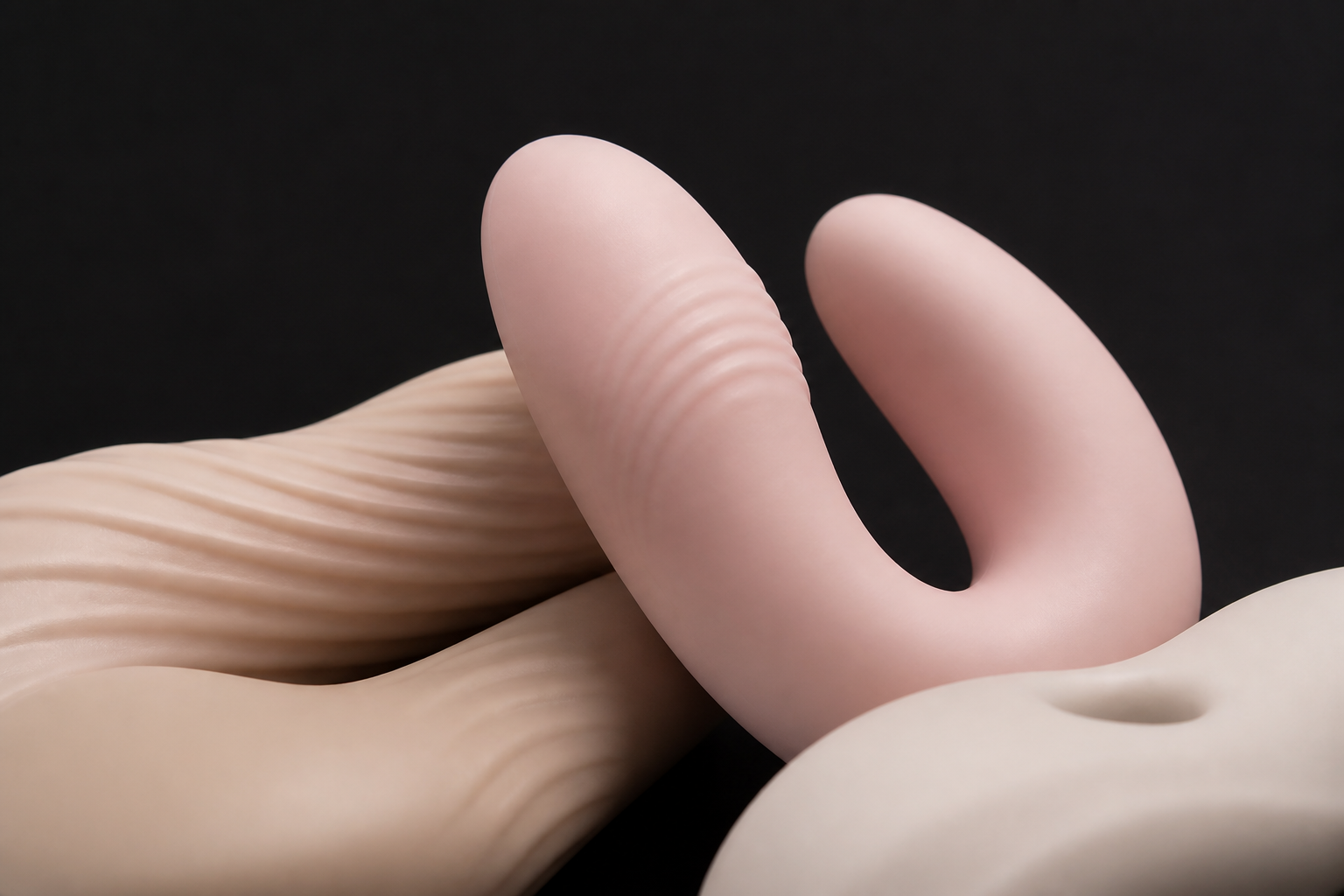
Most product pages list a material, usually silicone or TPE, and most buyers skip over it. That's a mistake, because the material decides how a toy feels, which lube you can use, how easy it is to keep clean and how long it lasts. This guide explains the difference in plain language so you can choose with confidence.
What is silicone?
Silicone is a firm-but-flexible, smooth material used for most vibrators, bullets, cock rings and many sleeves. Good-quality silicone is non-porous, which means water and soap clean the surface properly and there are no tiny pores for bacteria to hide in. It handles warm water well, doesn't smell, and keeps its shape for years when looked after.
What is TPE?
TPE (thermoplastic elastomer) is a softer, stretchier, more 'skin-like' material. It's popular for masturbator sleeves and strokers because it squeezes and grips in a way firmer silicone can't. You'll also see it called TPR or 'jelly' on some packaging. TPE is slightly porous, so it needs more careful cleaning and drying, and it wears out sooner than silicone.
Silicone vs TPE at a glance
- Feel: silicone is smooth and velvety, TPE is softer, squishier and stretchier.
- Hygiene: silicone is non-porous and easier to clean, while TPE is slightly porous and needs thorough washing and drying.
- Lube: use water-based lube with both. Silicone-based lube can damage silicone toys, and oil can damage TPE.
- Lifespan: silicone lasts longer. TPE sleeves are best treated as replaceable after heavy use.
- Price: TPE toys are usually cheaper, and premium silicone costs more.
- Sharing: silicone is the better choice if a toy will be used by more than one person, ideally with a condom over it.
Which is better for women's toys?
For anything used internally, choose silicone where you can. Most quality vibrators, G-spot vibrators and bullet vibrators use silicone, often with ABS plastic for the handle or motor housing. ABS is a hard, smooth plastic that's also non-porous and easy to wipe clean.
Which is better for men's toys?
It depends on the feel you want. Soft TPE sleeves give a realistic, snug squeeze, which is why many male masturbators and masturbator cups use it. Silicone sleeves are a little firmer but are easier to keep hygienic and tend to last longer. For cock rings, silicone is the usual choice because it stretches on and off easily and cleans quickly.
How to tell what you're buying
- Check the product photos and listing for the material. If it isn't stated, ask before you buy.
- A strong chemical or plastic smell when you open the box is a warning sign. Quality silicone has almost no smell.
- A sticky or oily surface on a new toy usually means a low-quality soft plastic.
- Very cheap 'jelly' toys that feel greasy are best avoided for internal use.
Caring for each material
- Silicone: wash with warm water and mild soap or a toy cleaner, dry it and store it on its own so it doesn't touch other toys.
- TPE: rinse straight after use, turn it inside out if you can, wash it, then let it air-dry completely. A light dusting of cornstarch keeps it soft.
- Both: store them in a pouch away from sunlight, and keep different materials apart, because some soft plastics react with each other when they touch.
For step-by-step care, read how to clean a masturbator and our general cleaning and storage guide. If you're still unsure which lube to use, how to choose a lube explains it, and you can browse water-based lubricants.
The bottom line
Choose silicone if you want the easiest cleaning and the longest life, especially for vibrators and anything used internally. Choose TPE if you want a soft, stretchy, realistic sleeve at a lower price and don't mind a little more care. Either way, use water-based lube and dry your toys properly.
Every Livemacy order ships in a plain box with no product name on the label. You can pay in full through PayU (UPI, cards, net banking or wallets), or choose partial COD: 50% online and the rest on delivery with OTP. Metro deliveries usually arrive 1–3 business days after dispatch, and other cities take 3–7 days.